
Creative perspective
A compelling idea has a point of view. We look for interactions that express it through choices and feedback, not just through presentation.
Game development / Sun Valley, California
A studio for considered play.
We explore how clear design, responsive systems, and careful iteration can make play worth paying attention to.
Meet the studio01 Studio
Doxa Games, Inc. is a game development company in Sun Valley, California. We approach play as a relationship between what a player can do, what they can understand, and what makes them curious to try again.
A compelling idea has a point of view. We look for interactions that express it through choices and feedback, not just through presentation.
Systems should make good ideas easier to explore. Clear architecture and practical testing create room to change direction when the work calls for it.
02 Mission
Bring design and engineering together to create interactions that invite curiosity, reward attention, and give players room to learn.
Build a studio where careful experiments inform creative decisions, and where craft matters as much as the ambition behind an idea.
03 Craft
Shape rules, pacing, and feedback around what players notice, understand, and choose to do.
Build responsive behavior with an eye toward performance, reliable state, and systems that are straightforward to change.
Use sketches and focused prototypes to compare possibilities and find an expressive direction before committing to detail.
Set practical milestones, document the reasons behind decisions, and review quality as the work evolves.
04 Method
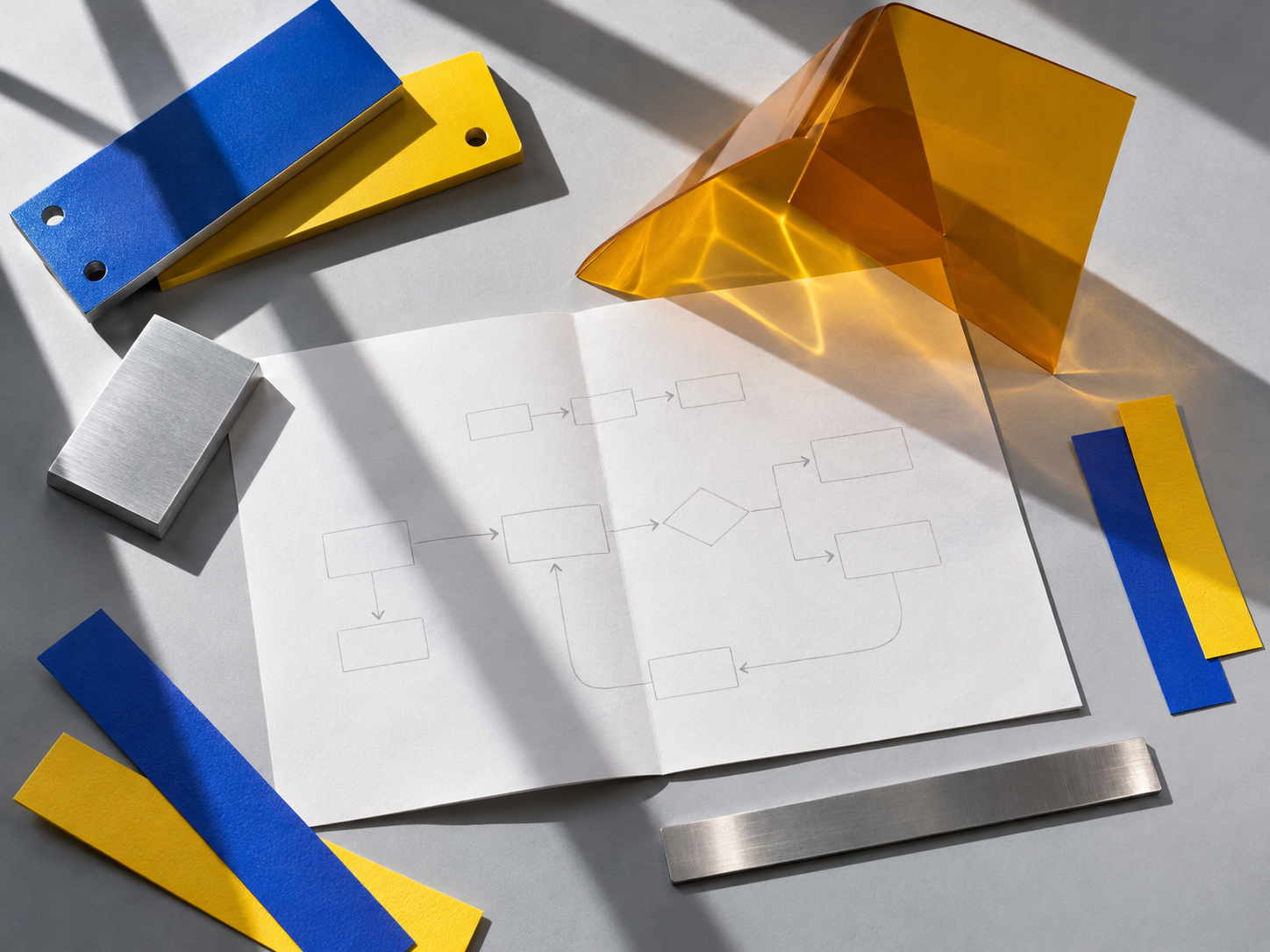
Describe the experience we want to make and the question that needs an answer.
Make the simplest version that lets us observe how an interaction behaves.
Compare the result with our intent, listen carefully, and keep track of what surprised us.
Keep the useful parts, improve the rough ones, and decide what to explore next.
05 Principles
Give players clear information and meaningful choices. When something adds complexity, it should give something worthwhile back.
Be open to an unexpected direction and give it a fair test. A small experiment is often more useful than another round of speculation.
Explain why a choice was made, listen when someone sees it differently, and leave enough context for the next person to build on it.
Use realistic priorities, maintainable systems, and a pace that leaves time for care and review.
06 Direction
Study how rules, feedback, and presentation can work together to create new ways to play.
Improve testing and documentation so useful discoveries can inform the next round of work.
Keep collaboration direct, prioritize deliberately, and make room for reflection as the studio develops.
07 Contact
For studio inquiries and creative introductions.
[email protected]Doxa Games, Inc.
9107 Ledge Ave